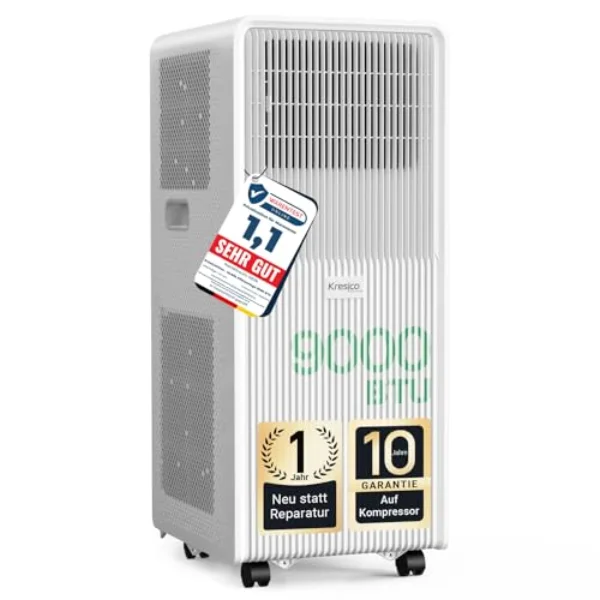
BTU and room size: the decision that matters most
BTU (British Thermal Units) measures cooling power, and matching it to your floor area is the single most important choice you'll make. As a rule of thumb, allow around 350 to 400 BTU per square metre at a normal ceiling height and average insulation. That puts a small bedroom up to 14 m² at roughly 5,000 BTU, a standard room up to 25 m² at around 9,000 BTU, and a large or open-plan room up to 35 m² at about 12,000 BTU.
Two mistakes are common. Undersizing means the unit runs flat out and never quite cools the room, which wastes electricity and leaves you uncomfortable. Oversizing is just as bad in its own way: an overpowered unit cools quickly but then short-cycles, dehumidifies poorly and is needlessly loud and expensive. The aim is a unit that's matched to the room — fast enough to reach temperature, then settling into a calm cycle. Several factors push the requirement up: large south- or west-facing windows, loft rooms, poor insulation, high ceilings, several people and heat-producing equipment. If a few of those apply, size up a class. Our dedicated BTU sizing guide does the maths for your room.
Noise: what the dB figures really mean
Single-hose portable units sit between roughly 62 and 67 dB — about the level of a normal conversation. None are truly silent, because the compressor and fan are inside the room with you. A few decibels sounds trivial, but at night it isn't: every extra 3 dB is about a doubling of sound intensity. For a bedroom, choose the lowest dB figure you can and look for a sleep mode, which lowers the fan speed and dims the display overnight. For a living room used mostly during the day, noise matters less and you can prioritise cooling power. If quiet is your priority, our guide to the quietest portable air conditioners ranks the options.
Energy ratings and running cost
Single-hose portable units rarely reach the very top energy classes by design, because the exhaust hose draws some warm air back into the room; class A to C is typical. Don't fixate on the label alone. The bigger lever on your bill is correct sizing: a properly matched unit reaches the target temperature quickly and then cycles, drawing power only intermittently, whereas an undersized unit runs continuously at full power. In practice, the right-sized B-rated unit will often cost less to run than an undersized A-rated one. A timer also helps — cooling the room only when you're in it is the simplest saving of all.
Features worth paying for — and ones you can skip
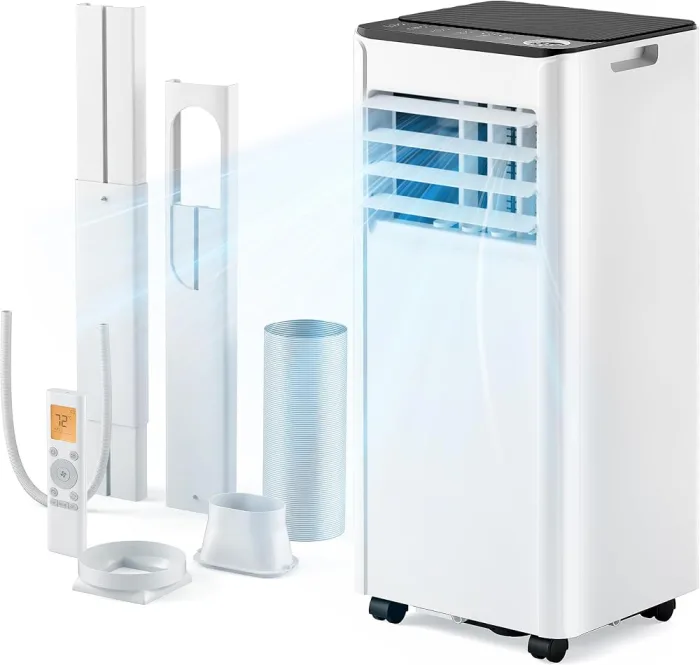
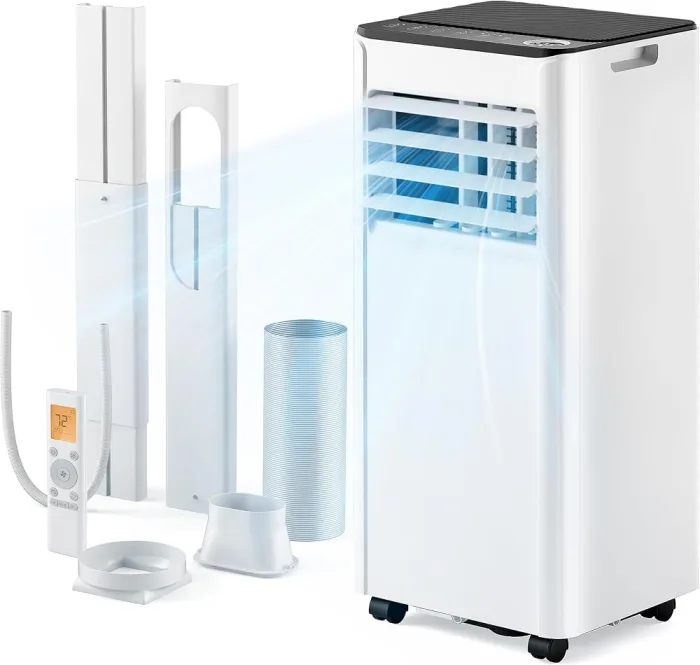
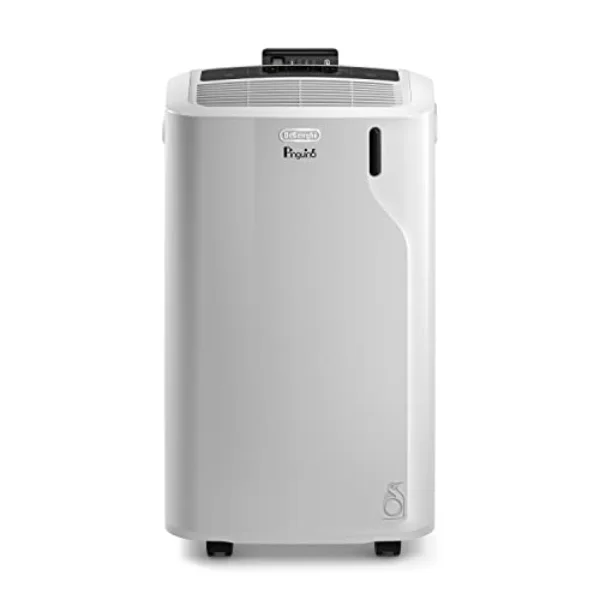
A few features genuinely matter. A good window-sealing kit is one: a poorly sealed window lets warm air straight back in and undermines the whole unit, so check the kit suits your window type before buying. A dehumidify mode earns its keep in Britain, where damp, muggy heat often feels worse than dry heat. A sleep or night mode is worth having for any bedroom unit. A self-evaporating water system, as on the De'Longhi Pinguino, spares you the chore of regular draining.
Other features are nice-to-have rather than deciding factors. WiFi and app control let you switch the unit on before you get home, but the supplied remote is usually more reliable, so don't let app control pull you away from cooling power and noise. Brand buys you build quality, support and resale confidence — worth paying for if you value longevity, but never a substitute for the right BTU rating.